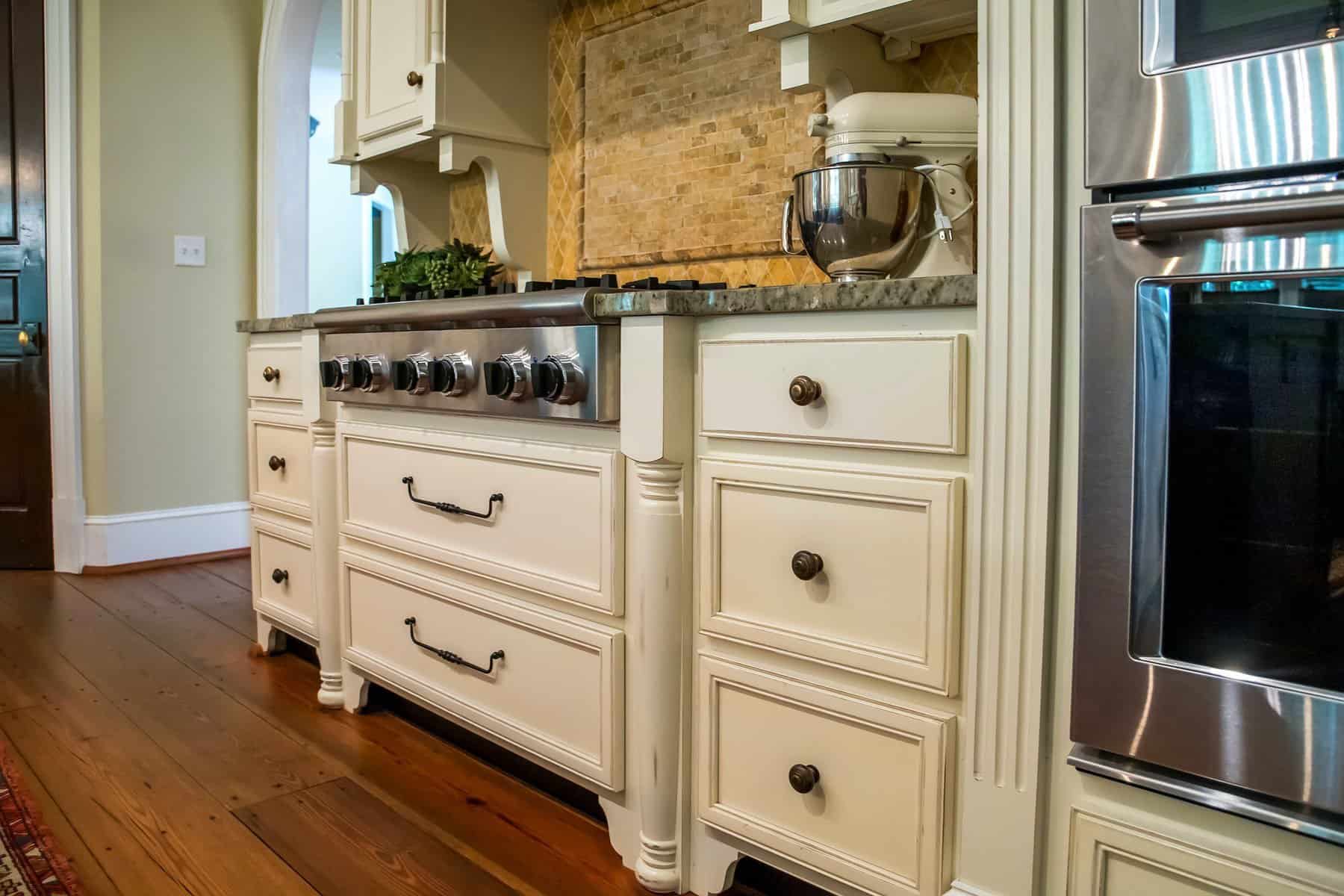

I’ve lost count of how many homeowners call us already sure they want their cabinets painted. They’re just stuck on one detail: the best sheen for kitchen cabinets. It’s a smaller question than color. But it matters just as much. Sheen decides whether your cabinets still look sharp in five years, or start looking tired in one. After years of painting cabinets across Mt. Lebanon and the South Hills, we’ve learned something important. The best paint finish for kitchen cabinets almost never comes down to personal taste alone. It comes down to how that kitchen actually gets used: who’s cooking, how close the doors sit to the stove, and whether small hands touch it every day.
At Four Pillars Paint, our cabinet painting team fields this question on nearly every estimate. Picking the wrong sheen is one of the most common regrets we hear from homeowners who tried a repaint before calling a professional. The paint itself usually wasn’t the problem. The finish just wasn’t built for what a kitchen does to it every day.

Why the Sheen You Choose Actually Matters
Most homeowners walk into this decision worried about the wrong thing. They spend hours comparing paint colors. Then they pick a sheen almost at random. Nobody tells them that sheen affects durability just as much as color affects mood.
The real frustration usually shows up about six months later. It’s not on the day the doors go back on. That’s when the finish near the stove starts looking dull. Fingerprints stop wiping off the pantry door the way they used to. A finish that looks great on day one but dulls within a year isn’t a paint problem. It’s a sheen mismatch. Getting this right from the start means you won’t be standing in your kitchen next year, wondering why the color you loved doesn’t look the same.
Cabinet Paint Sheen Options at a Glance
Here’s how the main sheen options compare for painted kitchen cabinets. Most professional cabinet painters stick to the top three rows for any surface that gets touched every day.
| Sheen | Shine Level | Durability | Best For |
|---|---|---|---|
| Satin | Low to medium | High | Most kitchens and doors with minor dings or wear |
| Semi-Gloss | Medium to high | Very high | High-traffic kitchens, areas near the stove and sink |
| High-Gloss | Highest | Very high, if applied correctly | Modern kitchens with flawless, sprayed-smooth doors |
| Flat or Eggshell | Low | Low | Not usually recommended for cabinets; better suited to walls |
Satin: A Versatile, Forgiving Option
Satin is what most of our clients land on. There’s a good reason for it. A satin finish reflects just enough light to look polished, without drawing attention to small flaws in the wood underneath. It’s a smart pick for older cabinet boxes with small dents or sanding marks. A higher sheen would only make those flaws more obvious.
Manufacturers back this up too. Sherwin-Williams lists satin among its recommended sheens for cabinets and trim. Benjamin Moore’s Advance line, one of the more popular cabinet-specific paints on the market, ships in satin for this exact reason. Satin still wipes clean with a damp cloth; it just does it with less shine than semi-gloss.

Semi-Gloss: Built for Grease, Steam, and Daily Wear
If your cabinets sit near the stove or a sink that runs hot water all day, semi-gloss is usually the better call. It’s the sheen with the best track record for standing up to grease, steam, and repeated scrubbing without dulling. Sherwin-Williams’ own sheen guidance points to semi-gloss for kitchens specifically, because it balances shine with genuine cleanability.
The tradeoff is honest: semi-gloss reflects more light than satin. That means small surface imperfections show up a little more. On cabinets that are structurally solid to start, that tradeoff rarely outweighs the durability gain. It’s often the best sheen for kitchen cabinets that see real daily use, not just occasional cooking.
High-Gloss: The Boldest, Least Forgiving Option
High-gloss is the sheen homeowners request when they’ve seen it in a magazine. They want that same sleek, almost lacquered look. It delivers, but it comes with conditions. High-gloss reflects the most light of any sheen, so it also magnifies every ripple, brush mark, and sanding flaw underneath it. Paint manufacturers and cabinet refinishers agree on this point: gloss only looks good over a surface that was prepped to a near-flawless finish first.
That’s why high-gloss is usually the sheen we recommend spraying, not brushing. It works best on newer cabinet boxes or smooth doors that start out close to flawless. If your cabinets have years of dents and touch-ups, gloss will show every one of them.
How We Prep Every Kitchen for a Finish That Lasts
Whichever sheen you land on, the finish is only as good as the prep work underneath it. Our cabinet painting process starts by removing and labeling every door and drawer front. That way, nothing gets reassembled in the wrong spot. We sand and degrease every surface before a coat of paint ever touches it, because grease and dust are the two biggest reasons a fresh paint job fails early. From there, we prime, then apply the sheen you’ve chosen in a controlled setting built for an even, durable coat.
Most cabinet painting projects with us run three to four days on-site. Every completed project is backed by a one-year warranty on workmanship, so the sheen you picked still looks the way it did on day one.
A Simple Way to Decide
If you’re still weighing your options, these four questions usually settle it fast:
What the Right Finish Can Do for Your Home’s Value
Picking the best paint finish for kitchen cabinets isn’t only about how your kitchen looks next week. Homeowners consistently rank kitchen updates among the most satisfying projects they take on, and the numbers back that up. According to the National Association of Realtors’ 2025 Remodeling Impact Report, a minor kitchen upgrade earned a perfect Joy Score of 10. That’s the same top score as a full primary suite addition, at a fraction of the cost.
A durable, well-chosen sheen is part of what makes that upgrade last. Cabinets that still look freshly painted two or three years later hold their value, both for your own enjoyment and for buyers touring the kitchen later on.