

If you’ve searched how to protect floor when painting, most of the advice you found was written for DIYers. But if you’re planning to hire a crew, the better question is a little different. Do painters move furniture, and who’s responsible if a drop of paint lands on your hardwood? I’ve walked through enough homes to know this comes up early. I’d rather answer it before you pick up the phone. Here at Four Pillars Paint, it’s one of the first things we talk through on every interior house painting estimate.
This article covers what painters usually handle, what’s usually left to you, and what good floor and furniture protection looks like. You’ll also get a short list of questions worth asking any painter before you sign, including us.

Why Floor and Furniture Protection Deserves Your Attention
Most people planning an interior paint job think about color first. That makes sense. But the walls are only part of what’s in the room. Your floors, your couch, and the dresser your grandmother left you all sit a few feet from open paint cans.
A mistake can get expensive fast. According to national cost data from Angi, refinishing hardwood floors costs about $1,900 on average. Most projects run between $600 and $4,500. That’s a lot to spend fixing a problem that good prep could have prevented.
Then there’s the part nobody puts on an invoice. Some homeowners feel uneasy about having a crew in their space at all. They wonder if they’ll need to hover over every room or spend a weekend scrubbing drips off the baseboards. You shouldn’t have to babysit the people you hired to help you.
Do Painters Move Furniture? Here’s the Honest Answer
The short answer is that it depends on the painter. Many crews will slide large pieces to the middle of the room and cover them. Others expect the room to be cleared before they show up. Neither approach is wrong, but a surprise on day one can throw off your whole schedule.
Here’s how the work is often split on a typical interior job:
| Item | Who Usually Handles It | Why |
|---|---|---|
| Sofas, beds, and dressers | Painters (moved to the center and covered) | Heavy and hard to carry out of the room |
| Lamps, TVs, and electronics | Homeowner | Cords and screens are easy to damage |
| Wall art, mirrors, and photos | Homeowner or painter | Every wall needs to be clear |
| Small decor and shelf items | Homeowner | Small items get misplaced or broken |
| Pianos, antiques, and heirlooms | Homeowner or a specialty mover | High value and hard to replace |
This is a common split, not a rule. Every contractor sets its own policy.
That’s why the best time to ask is before you sign anything. Bring these questions to any estimate:
What Good Floor Protection Looks Like
Not every floor needs the same cover. A plastic sheet that works on carpet can turn slick on hardwood. Tape that holds well on tile can also pull at some floor finishes. Here’s a simple look at common options:
| Floor Type | Common Protection | What to Watch For |
|---|---|---|
| Hardwood | Rosin paper or canvas drop cloths | Grit trapped under a cover can scratch the finish |
| Carpet | Canvas drop cloths or carpet film | Drips can soak through thin covers |
| Tile and stone | Canvas drop cloths | Grout lines can hold paint if a drip sits |
| Stairs | Canvas runners secured at each step | Loose covers can become a trip hazard |
Canvas tends to stay put and soak up small drips, while plastic does a better job blocking larger spills. Many crews use both, depending on the room.
Older Homes Need an Extra Layer of Care
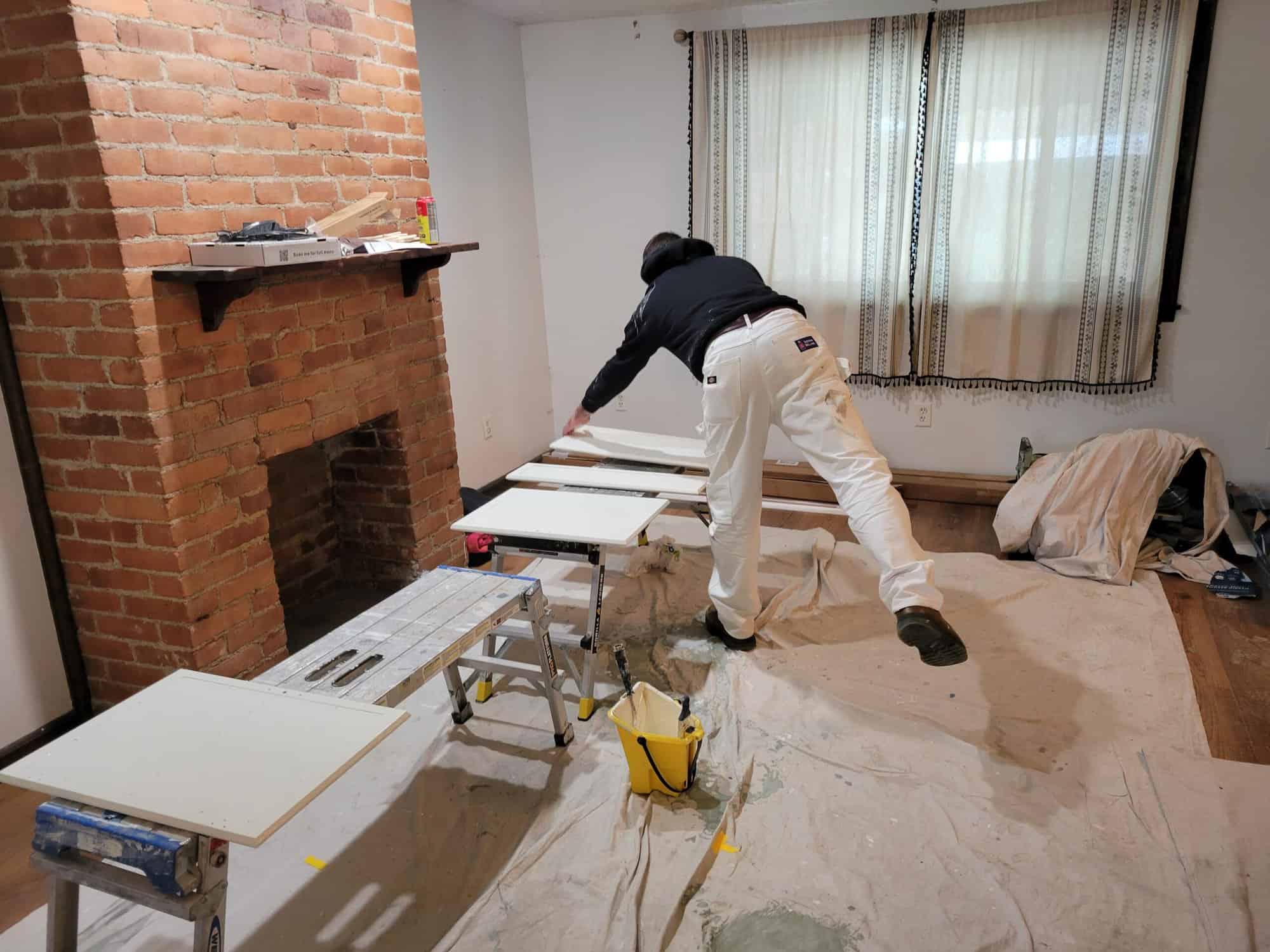
If your home was built before 1978, floor protection isn’t only about drips. According to the EPA, about three out of four U.S. homes built before 1978 still contain some lead-based paint. Sanding or scraping those surfaces can create dust that settles into floors and furniture.
That’s why federal rules go further for older homes. Under the EPA’s Lead Renovation, Repair and Painting Rule, paid contractors who disturb paint in pre-1978 homes must be certified. They must also cover the floor, carpet included, with taped-down plastic. That cover has to reach at least six feet past the work area.
Older homes are part of the mix around Cranberry Township. Census data for the 16066 ZIP code shows that nearly 1 in 4 homes there were built before 1980. If yours is one of them, ask any painter you’re talking to whether their firm holds EPA lead-safe certification.
How We Protect Your Home During Interior Painting
At Four Pillars Paint, we cover and protect furniture and carpets on our interior projects, and we finish with a complete cleanup. Here’s how that plays out on our interior house painting projects:
Our team has completed more than 400 projects and brings over 40 years of combined experience. We’re licensed and insured, and our painters are screened. You’ll get a free, detailed proposal within 24 hours of your estimate.
We work with homeowners in Cranberry, Wexford, Warrendale, and Franklin Park, along with the rest of the Greater Pittsburgh area.
What Can Go Wrong When Protection Gets Skipped
A rushed setup can turn a two-day paint job into a much longer headache. Most of the damage happens in the first hour, before anyone notices it. Common problems include:
Each of these is far easier to prevent than to fix. A few extra minutes of setup costs much less than a floor repair.
What a Well-Protected Paint Job Feels Like

When protection is done right, the only thing that changes in your home is the color on the walls. Your floors look the way they did that morning. Your furniture is back where it belongs. You walk into a finished room instead of a cleanup project.
That’s the outcome worth planning for. It starts with asking the right questions before anyone opens a can of paint.