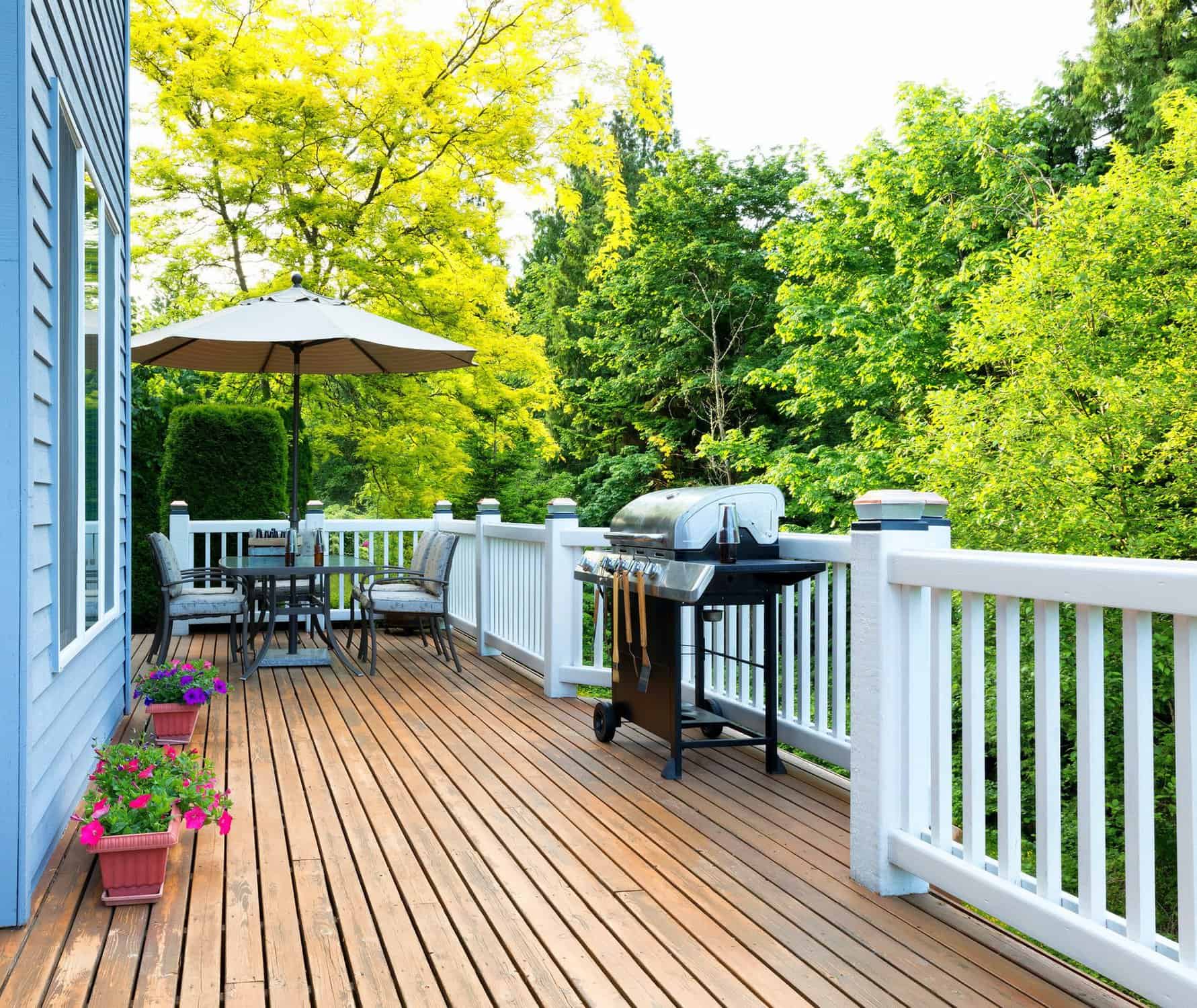

A deck stain fades quietly, so how often should you stain your deck when Pittsburgh’s weather is in the mix? For deck staining Pittsburgh homeowners can plan around, I start with about every two to three years for the boards you walk on. That range can move up or down based on your stain, your sun exposure, and how much foot traffic the deck gets. At Four Pillars Paint, our deck and fence painting team looks at decks all season, and I wrote this post so you can time the work before the weather forces the issue.
If you’re weighing a fresh coat now against waiting another season, that’s a fair call. You don’t need a perfect number. You need a way to read your own deck. Below, I’ll walk through what Pittsburgh weather does to wood, how each finish holds up, and the signs that tell you it’s time. I’ll also push back on one common idea: that repainting is the default answer.

Why Pittsburgh Weather Is Hard on Deck Finish
A deck finish has one main job. It keeps water and sun from breaking down the wood. Pittsburgh weather gives it plenty of both.
The National Weather Service lists Pittsburgh’s 1991 to 2020 normals at about 40 inches of precipitation a year, plus about 44 inches of snow. Overnight lows also hit freezing or colder on roughly 114 days a year.
That matters because wood takes on moisture in wet months and dries out in dry ones. Boards that swell and shrink again and again put steady stress on any finish sitting on top of them. I plan around those same seasons for decks in Cranberry, too.
How Often Should You Stain Your Deck?
Sherwin-Williams tells homeowners to plan on a fresh coat every 2 to 3 years, depending on climate and wear. Angi gives the same range for most decks. I treat that range as a starting line, not a promise. Here is what moves your deck up or down.
| What changes the timing | Why it matters | What it means for you |
|---|---|---|
| Stain type | See-through stains show more grain and block less sun than solid-color stains | Lighter stains usually need attention sooner |
| Sun exposure | Direct sun breaks a finish down faster | All-day sun means earlier checks |
| Foot traffic | Walking, furniture, and grills scuff the surface | Busy spots wear first |
| Water and shade | Damp, shaded boards hold moisture longer | Watch shaded areas for dark spots |
| Prep quality | Dirt and old peeling finish block new stain from bonding | Poor prep shortens any stain’s life |
Notice that stain type sits at the top. Lighter, see-through stains usually ask for attention sooner, while heavier pigmented stains often go longer. Sources disagree on exact years for each type, so I skip made up numbers and read the deck itself.
Repaint or Restain? Where I Push Back
Many people ask me whether they should repaint or restain. I’d ask a different question first. Does the finish sit on top of the wood, or soak into it?
Paint forms a film on the surface. Stain soaks in. The USDA Forest Products Laboratory warns that painted decks can develop decay, slick surfaces, cracking, and flaking. That is why I lean toward stain for deck boards.
A peeling film also needs extra prep before the next coat goes on. Solid color has its place, and I’ll tell you plainly when it fits your boards. I just won’t recommend paint because it sounds simpler.
Signs Your Deck Is Due Before the Calendar Says So
| What you see | What it usually means | Next step |
|---|---|---|
| Water soaks in instead of beading | The stain’s water protection is fading | Plan a recoat |
| Gray or patchy boards | Sun has worn through the finish | Schedule a restain soon |
| Peeling or flaking finish | The film is failing | Needs prep before new stain |
| Black or green spots | Mildew or trapped moisture | Clean before any coat |
| Rough grain or small cracks | Surface wear on the boards | Sand, then recoat |
The water test takes about a minute. Sprinkle a little water on the boards. If it beads up, the finish is still working. If it soaks in, the stain is wearing thin. Try it in a sunny spot and a shaded spot, since each one ages at its own pace.
What Prep Looks Like Before We Restain
Prep decides how long a stain lasts. Stain needs clean, dry, sound wood to hold on. Old finish that won’t bond has to come off first.
Here are the steps our crew follows on a deck:

Our deck staining season runs March to October, when the weather is mild and dry enough for stain to soak in and bond.
A Simple 3 Step Plan
You don’t have to solve this alone. Three quick steps get you a clear answer.
- 1Run the water test this week, once in a sunny spot and once in a shaded spot.
- 2Write down what you see, like gray boards, peeling, or dark spots.
- 3Call Four Pillars Paint for a free estimate, and we’ll tell you whether your deck needs a coat now or can wait.
What Happens If You Wait Too Long
Some decks stretch past three years and hold up fine. The risk is bare wood. Angi warns that waiting too long can expose wood to pests, moisture, and UV rays, and that can lead to lasting damage.
Once a board goes soft, a new coat can’t fix it. That board has to be replaced. A recoat done on time keeps small wear from turning into that bigger job.
The good news is that timing is in your hands. A deck coated before the finish fails stays ready for cookouts and quiet mornings. You shouldn’t have to guess about your own deck.
How Often to Restain a Deck in Cranberry, PA
We stain decks in Cranberry, Wexford, Warrendale, and Franklin Park, along with Pittsburgh and nearby areas. I use the same 2 to 3 year starting range in each one, then adjust after I see your deck. We look at your stain type, your sun, and your boards, then give you a straight answer.